Mark Carney proves Donald Trump can win elections outside his own country
In May 1925, Robert Carney and Nora Moran left the tiny village of Aghagower on the foothill of Croagh Patrick, Co Mayo, the place where St Patrick had founded his first church in AD 441. Robert was 23, Nora 22, and they were bound for a new life in Canada. When they arrived at Grosse Isle, Montreal, in the summer of 1925, their total possessions were valued at £5, about €500 in today’s money. With that meagre sum, Robert and Nora managed to cross this vast country, settling in Alberta.
When their grandson, Mark Carney, was in charge of sterling as governor of the Bank of England, he kept a print of Aghagower on the wall behind his desk, lest anyone forget where he was from.
Today, as prime minster of Canada, Carney is one of the few politicians to stand up to Donald Trump – and it’s a role he appears to relish. No other politician in the West has the stature of Carney, a man whose intellectual pedigree is unsurpassed. He understands that we are in the middle of a cultural, economic and political war between authoritarians and democrats.
The history and the norms of the past 70 years – multilateralism, independent judiciaries and central banks, respect for international treaties – are up for grabs, and Carney is prepared to fight for them. What at Davos he called “the rupture” between the US and Canada is real, and when you are in Toronto, you feel it.
Given his prominent role as the anti-Trump politician, even he would admit there is no Mark Carney without Donald Trump. Carney’s unexpected victory in last year’s Canadian election proved that Trump is such a political force that he can win elections outside the US. Before Trump’s re-election in 2024, Carney’s party, the Canadian Liberals under the jaded leadership of Justin Trudeau, was dead and buried.
The Conservative Party were the government in waiting and its leader, Pierre Poilievre, was polling an average 25 per cent lead in the run-up to the election. A Conservative victory, with the Molson-lite Canadian version of Maga, seemed certain – until Trump mused that Canada should be part of the US and dismissed the then prime minister as “Governor” Trudeau.
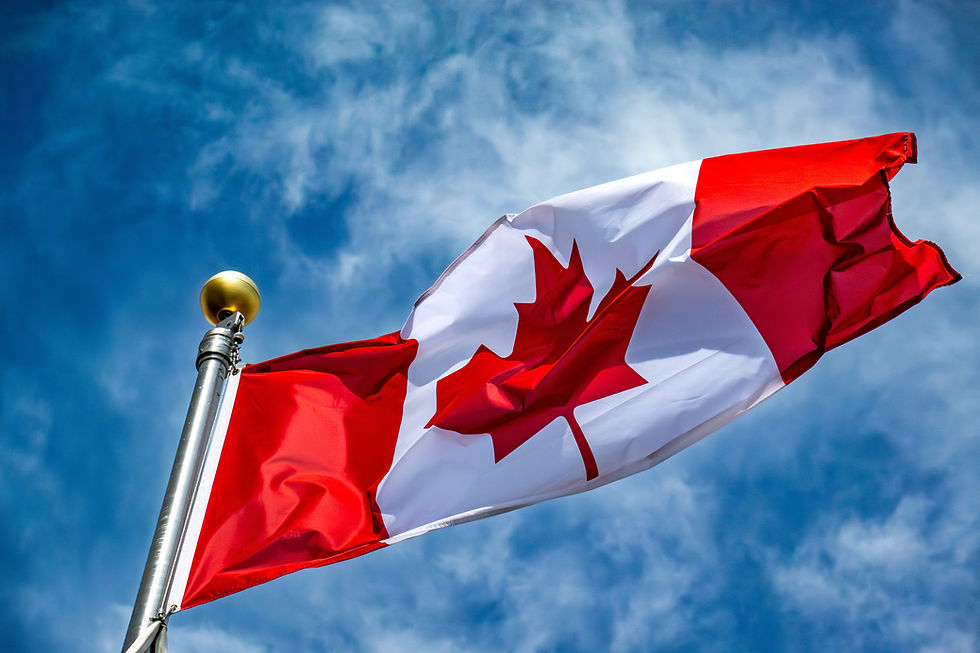
The normally quiet Canadians exploded. Trump managed to do something that no one in the past had ever achieved: he created Canadian nationalism. Seeing his opportunity, Carney rode the patriotic wave and turned a 25 per cent lag into a modest but impressive victory. Wrapped in the Maple Leaf, emphasising his amateur college ice-hockey credentials, Carney, the former internationalist technocrat, became the calm manifestation of Canadian nationhood. And from current polls across Canada, it appears the nation is with him.
All he needs is for Trump to keep behaving badly. A fairly odds-on bet, wouldn’t you think? Carney’s electoral shtick wasn’t simply that the US is a threat; he countered Poilievre’s mantra that “Canada is broken” with the more upbeat message – Canada isn’t broken, just badly managed.
Ever the economist, Carney’s mantra is that Canada’s balance sheet, buoyed up by all the commodities any country could ask for, is the strongest in the world, but it has a cash flow problem and that problem is the result of his predecessor’s political mismanagement.
Carney must put distance between himself and Trudeau, pitching the idea that Carney Liberals are serious people, while Trudeau Liberals were glorified students playing at real politics. By shacking up with Katy Perry, Trudeau has kind of done Carney’s work for him. What better image of the contrasting characters of both men than the hard-working, married Carney, sleeves up, toiling for Canada into the night, while Trudeau is snogging Perry – al fresco – at Coachella? A picture tells a thousand words and an Instagram post a million.
Even if Trump and Trudeau continue to offer up gifts to Carney’s PR, his stunning victory contains the seeds of his destruction and, ironically, it is his home province of Alberta that has just dealt the Carney premiership a wild card. Civilised Canada is suffering from its own internal culture war, which for Canada watchers is not a new thing.
Canada is a fascinating country – and by now you have probably twigged my fondness for the place, which was cemented by a student summer as a dishwasher here in the mid-1980s. The country has always lived on a cultural fault line. The traditional political division was a 17th-century linguistic and social fault line between English speakers and French speakers, beer drinkers and wine drinkers, Protestants and Catholics. The Anglo-French divide plagued Canadian politics for centuries.
In recent decades, the 1970s radical Quebecois separatist movement has given way to a more relaxed form of Quebec nationalism, largely the result of successful efforts to preserve the French language in Quebec. With the language and therefore French identity preserved, some wind has been taken out of the Quebec nationalist sails.
Today, a new secessionist movement is growing in Alberta, western Canada. Many people (but nowhere near a majority) in the oil- and commodity-rich province want to leave Canada. Their main economic gripe is that all the riches of Canada are under the ground – oil, gas and rare earths – and they are located in Alberta. The feeling of the separatist camp is that eastern Canada is living high on the hog with Albertan money.
And there is another cleavage between west and east. Eastern Canada, whether it is English- or French-speaking, is largely liberal and progressive, characterised by values that wouldn’t be out of place in European sociology departments. Alberta, in contrast, is cowboy country, a huge agricultural heartland of cattle ranching, rodeos, Stetsons and often Maga-type views. Think JR Ewing crossed with Nickelback.
If there is a Trumpian homeland in Canada, it is Alberta, culturally closer to Texas than Toronto. The combination of an economic grievance with a real cultural, social and attitudinal crusade is a dangerous cocktail.
Although it hasn’t been firmed up yet, independence campaigners have enough signatures to force a referendum, which some predict will be held in October. At the moment, the polls are overwhelmingly on the side of those who want to stay in Canada. The pro-independence base has rarely polled above 25 per cent, but nor did the pro-Brexit side in the UK in the months coming up to that 2016 vote. A referendum is a volatile creature. Could Alberta turn into a Canadian Brexit? At the moment, there looks to be no chance of Alberta leaving Canada, but Carney was the governor of the Bank of England when Britain left the EU. He knows how these things can go.
Carney is the embodiment of the Canadian Dream. When Robert and Nora waved goodbye to Aghagower a hundred years ago, could they have imagined their grandson would become prime minister of their vast new homeland?
Carney’s biggest challenge might not be to lead and redefine Canada, but to keep the world’s second-largest country together.


The irony of Carney leveraging Trump’s playbook while Trudeau’s corpse was still warm is peak political theater—and it clearly worked. I’ve been tracking this exact dynamic with https://stl-viewer.org
The irony of Carney’s Mayo roots echoing Trump’s playbook is wild—both men weaponize outsider status, but Carney’s version actually has a moral compass. I’ve been using this angle to rethink political branding, and it’s a goldmine for strategy nerds. https://z-image-turbo.me
The irony of an Irish-descended Carney channeling Trump’s playbook is rich, but it proves the brand travels—check out the full breakdown here. https://seedance-2.dev
The irony of an Irish-descended Canadian leader channeling Trump’s playbook to revive a dead party is rich, but Carney’s Mayo roots clearly gave him the grit for it. I’ve been tracking this shift and the parallels are uncanny, check out https://meshiai.pro
Carney’s Mayo roots are a wild twist, but the real lesson is how Trump’s playbook of grievance and disruption translates across borders—Trudeau’s corpse of a party never saw it coming. I’ve been digging into how that strategy echoes in other campaigns, and the breakdown here is spot on. https://faceless-video.net