Ireland’s low urban population has left us with a problem of extreme commuting
To understand the history and culture of multi-ethnic Yugoslavia, start with The Bridge on the Drina. By Nobel Prize winner Ivo Andric, this Balkan epic tells a five-century tale about the Bosnian town of Visegrad through the eyes of its different ethnic groups who lived on either side of this wonderful Ottoman bridge.
Spanning the river Drina, the multi-arched bridge united the divided local tribes. The Serbs on one side of the river and the Muslims on the other had different allegiances, customs, familial and political loyalties but the bridge brought them together in love, tragedy, business and the everyday comings and goings of life. The bridge over the Drina served as a symbol of co-operation, unity and common history in an otherwise troubled region.
In another troubled region of the world, on the shores of Lough Derg, the warring factions of Clare and Tipperary, divided by centuries-old tribal enmities and fiercely guarded inter-county loyalties, are similarly conjoined by an ancient bridge. For thousands of years, people have been crossing the water at Killaloe – the shortest distance between both sides of the Lough. Here, in the 11th-century seat of power of the last high king of Ireland, Brian Boru, the 13arched stone bridge has been the epicentre of public and commercial life for generations.
Last week, at a bar on the Tipperary side of the cultural divide, I witnessed the locals in heated discussion concerning the fate of the bridge. In the Balkans of Munster, where two counties, Tipp and Clare, collide, and a third, Limerick, threatens only a few miles downriver, few institutions bring the factions together. The bridge does.
Come summer when animosities flare, there’ll be skin and hair flying, but for now the closure of the old medieval bridge has focused the mind. Everyone has an opinion. The old Killaloe bridge was closed to traffic before Christmas following the completion of the new Killaloe bypass and the €88 million Brian Boru bridge further upstream, designed to take traffic out of the old towns of Killaloe and Ballina. The council, like remote Ottoman overlords in the Balkans, didn’t make it clear to the locals that the new bridge would require all traffic to be removed from the old bridge. It is now fully pedestrianised and many feel put out, citing long delays and a loss of business.
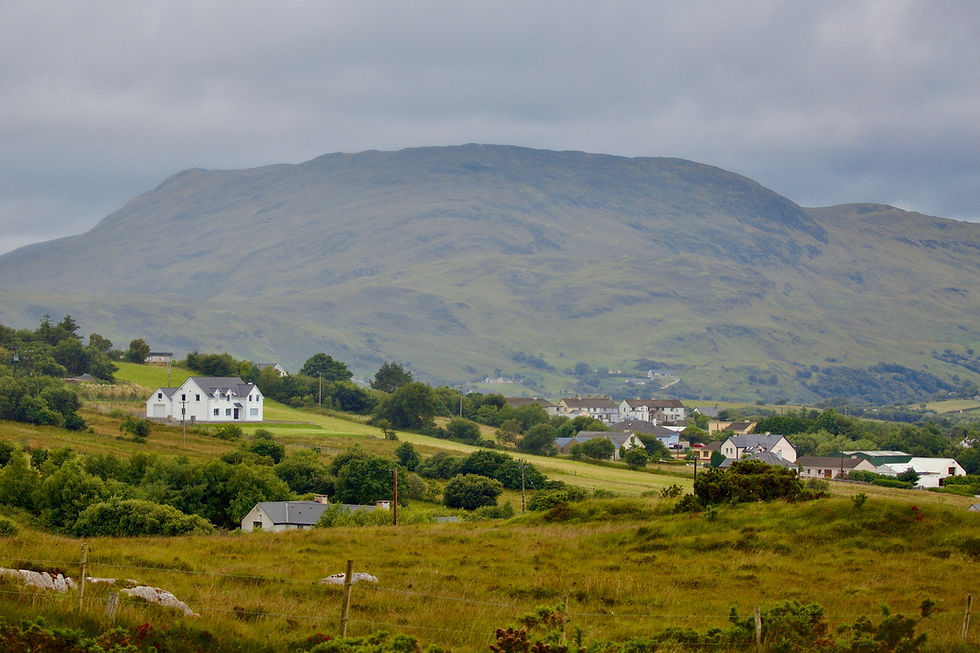
However, the real culprit in this beautiful part of the country is the fact that Ireland has become a country of sprawl. Suburbs creep out into ancient countryside and traditional villages – so much so that new bridges must be built because the old infrastructure is creaking and the old towns are choked with traffic. It’s a planning problem in a country where nearly everyone is compelled to drive. There used to be a train right to the centre of Killaloe from Limerick. Today you can only get around in a car and far too many of us are commuting.
According to the latest census, there is a massive gap between how Irish people live and where we live. In terms of how we live, the top (most dense) 20 per cent of urban areas account for 83 per cent of the work, school and college places. This makes sense: the vast majority of jobs, schools, retail and social venues are in urban areas. You would imagine in a well-planned country that around 83 per cent of people would live in urban areas, close to where they work, study, rest and play. But not in Ireland. The top 20 per cent of urban areas only account for 65 per cent of the population. The gap between how people live and where people live is filled by commuter sprawl.
Ireland’s development pattern has been uniquely car-centric. Suburban sprawl and one-off housing in surrounding counties have made the car the default mode of transport. In Ireland, 65.6 per cent of workers commute by car. Even in Dublin city and suburbs, nearly half of workers drive to work, and in smaller cities like Cork or Limerick, over 60 per cent do.
Among schoolchildren, car dependence is even more striking. The next time you see a little child trussed up in a car seat that has more safety features than the chair Neil Armstrong travelled to the moon in, remember that 60 per cent of primary pupils and 43 per cent of secondary students are driven to school. Walking or cycling to school has plummeted since the 1980s. Only 25 per cent of primary students walked or cycled in 2016, down from 50 per cent in 1986. If Irish planners were on “nixers” from national car dealerships this might make sense, but as far as I know this is not the case. It’s just an example of monstrously bad spatial management.
Ireland today is the least urbanised high-income country in the world. As noted above, only about 64 per cent of us live in urban areas, far below the 80–90 per cent typical in similarly wealthy countries. We hear lots about how Dublin dwarfs the rest of the country, but Dublin’s share of the national population (roughly 1.4 million out of 5.1 million) is not excessive by international standards.
The issue is not an over-concentration of people in the capital, but that Ireland’s urban population is unusually low, best exemplified by the fact that only about 9 per cent of Irish people live in flats or apartments. The EU average is 46 per cent. By contrast, about 90 per cent of Irish residents live in detached or semidetached houses, reflecting a spread-out, suburban housing model. We are inveterate commuters, which drives up infrastructure costs and commute times, while suppressing productivity and innovation that thrive in dense urban environments. People still work in cities and play in cities but the housing market hasn’t provided the urban homes where people need them.
The result is extreme commuting. Half of the work and student population of Dublin city commutes from outside the city daily while 25 per cent of all workers in Leinster (outside Dublin) travel into Dublin for work. Long commutes of more than an hour each way jumped by 30 per cent from 2011 to 2016, with around 250,000 people spending two hours in a car or train every day. Such patterns show up in global rankings of congestion and time wasted. Dublin is now the third most congested city in Europe (11th in the world), with drivers in the capital losing an average of 95 hours a year sitting in traffic jams. The same problem on a less extreme basis applies to Cork, Galway and Limerick, leading all the way back to Killaloe.
In the Balkans of Munster, like the real Balkans, the problems are not home grown but the result of greater forces beyond their control which no amount of tribal bragging can fix. Just don’t tell them that when they are in their colours, knocking strips off each other come the championship.


Якщо потрібно порівняти кілька джерел, зазвичай починаю з Lifehata, де є чимало матеріалів на життєві теми. Потім дивлюся Vrazhay, особливо коли питання стосується здоров’я, догляду чи стосунків, а сучасні сервіси й техніку перевіряю на Infovayb. Для домашніх і практичних тем часто підходить Poradka, більш пізнавальні матеріали шукаю на Infosaray, а ще іноді переглядаю Sutovychok.
Banqiao's pastry shops are known for long queues, especially around Mid-Autumn Festival, and the pineapple and phoenix cakes sell out fast. Reading an overview of a popular Banqiao pastry shop gives a sense of what makes these gift-box specialties worth the wait.
I recently came across and liked the variety of affordable reading options available there. It’s a convenient choice for anyone who enjoys buying books online and wants to keep their spending reasonable. Whether you’re picking up a book for yourself or looking for something new to read, Adhipati Creations is worth exploring.
Adhipati Creations
mình có lần lướt đọc mấy trao đổi trên mạng شيخ روحاني thì thấy nhắc nên cũng tò mò mở ra xem thử cho biết. mình không tìm hiểu sâu chỉ xem qua trong thời gian ngắn để quan sát bố cục cách sắp xếp جلب الحبيب các mục và trình bày nội جلب الحبيب dung tổng thể. cảm giác là các phần được trình bày khá gọn, các hurentest berlin mục rõ ràng Huren Berlin nên đọc lướt cũng không bị rối với mình như vậy là đủ để nắm tin cơ bản rồi. جلب الحبيب
👍
Great content with clear and easy-to-understand information. It's always helpful to have reliable updates in one place. I also follow lotería nacional del a3, so I enjoyed reading this article.